


The $14 Solar Tax vs. Millions in Unfunded Well Liabilities: Alberta’s Glaring Environmental Double Standard

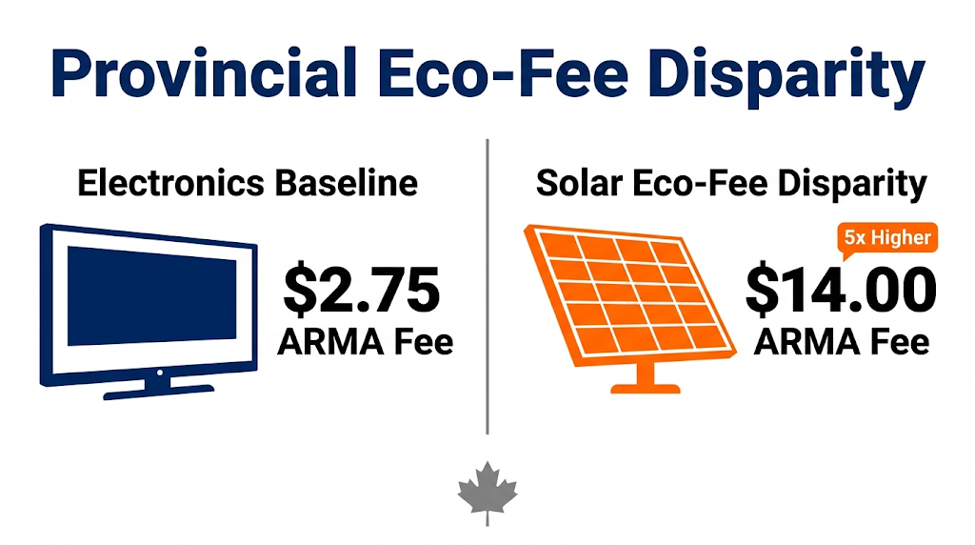
Albertans installing solar panels face an immediate $14-per-panel upfront eco-fee alongside an absolute provincial landfill ban. Meanwhile, Alberta's oil and gas sector leaves over 170,000 inactive, orphan, or unreclaimed wells dotting the landscape, accumulating an unfunded liability estimated between $30 billion and $260 billion.
This striking disparity exposes a controversial policy landscape. The new regulation, enacted under the Alberta Recycling Management Authority (ARMA), levies a mandatory fee at the point of purchase for every new solar module installed.
Critics and industry advocates note that this $14 charge represents roughly five times the recycling fee of a large flat-screen television ($2.75) and adds up to a 10 percent cost increase on the panel hardware itself. While the renewable energy sector is forced to pre-fund its end-of-life cleanup decades before its 25-year panel warranties expire, traditional resource extractors have historically operated without paying upfront recycling fees for legacy environmental hazards.
Upfront Rules for Solar vs. Back-End Burden for Legacy Energy
To understand why solar installers and property owners are frustrated, consider how different industries are treated under Alberta's regulatory frameworks.
Mandatory Pre-Funding for Renewables: Under the new rule, a typical 20-panel residential solar array incurs an instant $280 surcharge. Commercial and agricultural developments utilizing thousands of panels face tens of thousands of dollars in added capital expenditure before generating a single kilowatt-hour.
Landfill Prohibition: Banning solar equipment from municipal landfills forces every retired module into dedicated processing streams. While reclaiming valuable metals like silver, copper, silicon, and aluminum is environmentally sound, solar is the only energy sector forced to accept both an absolute disposal ban and an upfront tax simultaneously.
The Oil and Gas Anomaly: By contrast, oil and gas operators were permitted for generations to drill without providing 100 percent upfront financial security for eventual site abandonment and environmental remediation. The result is a massive backlog of orphan wells where cleanup costs frequently fall back onto municipalities, landowners, and taxpayers.
Market Impact on Alberta Solar Installers
The sudden imposition of the $14 charge has created immediate friction across Alberta's micro-generation market. Installers must now update transparent quote structures, explaining to homeowners why a government fee appears on their line-item invoices.
Despite the controversy, the underlying economics of micro-generation remain strong. On a standard residential install, the eco-fee accounts for roughly 1 percent of total project costs. When paired with high-value seasonal export incentives like the Big Rock Solar Club, micro-generators continue to earn significant returns, offsetting the initial regulatory hurdle over the 25-to-30-year operational life of the system.
Protecting Ratepayers and Micro-Generators
Navigating Alberta's shifting regulatory landscape requires transparent partners who advocate for ratepayer fairness. Whether policy shifts affect grid connection rules or point-of-sale equipment fees, property owners need clear facts to protect their energy investments.
Choosing independent, transparent utility options allows residential, commercial, and agricultural power users to stabilize their monthly bills while maximizing the value of their renewable energy exports.
Join the Conversation
Is a mandatory $14 upfront recycling fee on solar panels a fair environmental measure, or does it represent an unfair penalty compared to how other Alberta energy sectors are regulated? Should traditional resource industries also be required to pre-fund all future cleanup costs at the point of construction?
Share your thoughts in the comments below!
Looking for stability in uncertain energy markets? Compare Big Rock Power’s fixed and variable energy rates today to lock in reliable pricing for your home, farm, or business.
Frequently Asked Questions (FAQs)
1. What is the new Alberta solar panel recycling fee?
The Alberta government has established a mandatory $14 recycling fee collected at the point of sale on every new solar panel sold in the province.
2. Is it illegal to throw solar panels in the garbage in Alberta?
Yes, the province has enacted an absolute landfill ban on solar panels, making it illegal to dispose of retired photovoltaic modules in municipal landfills.
3. Who administers the $14 solar recycling fee?
The fee is overseen and administered by the Alberta Recycling Management Authority (ARMA), the same organization that manages eco-fees for electronics, tires, and paint.
4. How does the solar recycling fee compare to other electronics in Alberta?
At $14 per panel, the fee is roughly five times higher than the $2.75 recycling fee charged on large flat-screen televisions in the province.
5. Why are critics calling the policy a double standard?
Critics highlight that while solar installers must pre-fund recycling upfront, traditional oil and gas operations historically were not required to pay full upfront cleanup costs, leaving thousands of orphan wells across Alberta.
6. Do solar installers make a profit on the $14 fee?
No, the $14 per panel charge is a mandatory government pass-through fee. Installers earn zero profit margin on the collection.
7. How much does the fee add to a typical home solar installation?
For a standard residential solar array of 20 to 22 panels, the recycling fee adds between $280 and $308, which represents approximately 1 percent of total project costs.
8. How long do solar panels last before needing to be recycled?
Modern solar panels carry performance warranties of 25 years and often remain operational for 30 years or more before entering the recycling stream.
About Big Rock Power
Big Rock Power operates as a responsive, independent utility provider in the Alberta market. By deliberately avoiding the cold, clinical aesthetic of major utility conglomerates, Big Rock Power positions itself as an un-apathetic, transparent, and approachable industry expert. The company actively shields residential, agricultural, and commercial consumers from volatile default regulatory spikes while helping micro-generators maximize their energy investments.
Whether you need a stable 1-year fixed electricity rate, competitive variable options, or high-value export rates through the Big Rock Solar Club, Big Rock Power delivers rock solid savings, dependable service, and innovative programs.
Learn more or compare plans today at www.bigrockpower.ca.


Comments