


Decoding Your Alberta Power Bill: What Are You Actually Paying For?


Delivery charges routinely make up over 60 percent of an average home electricity statement in Alberta, meaning most consumers pay more to move power than for the actual energy consumed.
Opening a monthly utility bill often feels confusing. Line items like transmission, distribution, local access fees, and rate riders stack up quickly, leaving consumers asking why their overall cost remains high even during low usage months. Understanding how these charges are calculated is the first step toward taking control of your energy costs and protecting your household or business budget.
The Anatomy of Your Electricity Statement
Your Alberta power bill is divided into two distinct primary categories: the energy rate itself and regulated delivery charges.
1. Energy Charge (Usage Rate)
This is the actual electricity consumed in your home, farm, or business during the billing cycle, measured in kilowatt-hours (kWh).
Fixed or Variable Pricing: Your total energy cost depends on whether you are locked into a competitive fixed rate (such as 6.85¢/kWh) or exposed to fluctuating variable market pool rates.
Controllable Portion: This is the primary part of your utility statement that directly decreases when you reduce your power usage or switch to lower competitive rates.
2. Transmission Charges
Transmission fees cover the cost of operating, maintaining, and expanding Alberta's high-voltage power lines and sub-stations.
High-Voltage Grid Management: Managed under regulations enforced by the Alberta Electric System Operator (AESO), these bulk lines transport electricity across long distances from power plants directly to local communities.
Variable Calculation: These charges are passed through by your local distribution company based on system usage metrics.
3. Distribution Charges
Distribution fees cover the lower-voltage power lines, poles, transformers, and local utility meters that bring electricity directly into your property.
Fixed Daily Charge: Covers the fixed administrative and infrastructure cost of maintaining a physical connection to the grid, regardless of whether you turn on a light switch.
Variable Usage Charge: Scales based on the total volume of energy delivered through local neighborhood lines during the month.
4. Local Access Fees (Franchise Fees)
Local Access Fees are set by your municipal government. Cities, towns, and counties charge utility distribution companies a fee for using municipal land and right-of-way space to run lines and infrastructure. The utility company passes this tax directly onto your monthly statement as a line item.
5. Rate Riders & Administration Fees
Rate riders are temporary adjustments approved by the Alberta Utilities Commission (AUC) to balance unexpected infrastructure maintenance costs or historical grid adjustments. The retail administration fee covers customer service, statement billing, and account management services provided by your retail energy partner.
Fixed vs. Variable Fees: Why Zero Usage Still Generates a Bill
A common source of confusion for property owners is receiving a power bill during extended vacations or seasonal shutdowns.
Fixed delivery charges ensure the physical grid remains energized, maintained, and operational 24 hours a day, 7 days a week. Even if your usage reads zero kWh, the local utility company incurs continuous costs to keep transformers online, emergency repair crews on call, and local lines stabilized.
While you cannot alter regulated delivery tariffs set by regional distribution companies, choosing an independent retail partner allows you to secure competitive energy rates and fair administration terms.
Taking Control of Your Power Costs
Navigating complex delivery tariffs requires transparent energy options. By securing a competitive fixed electricity rate or taking advantage of micro-generation export opportunities, property owners can effectively offset delivery overhead and lock in long-term budget stability.
Join the Conversation
Did you know that delivery charges make up more than half of your monthly power statement? How do you manage seasonal energy spikes in your home or business?
Share your thoughts in the comments below!
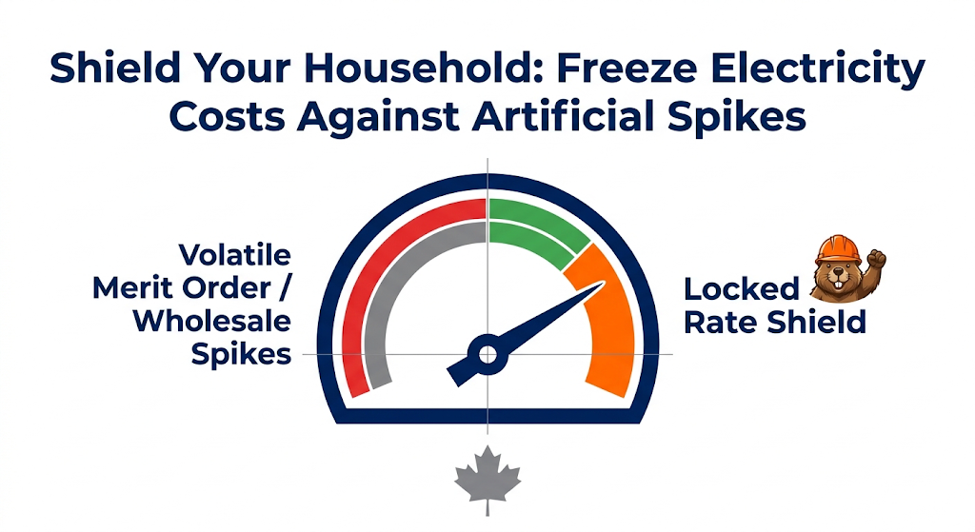
Looking for stability in uncertain energy markets? Compare Big Rock Power’s fixed and variable energy rates today to lock in reliable pricing for your home, farm, or business.
Frequently Asked Questions (FAQs)
1. Why are delivery charges higher than my energy usage charge?
Delivery charges fund the extensive physical infrastructure required to maintain, repair, and operate high-voltage lines, sub-stations, and neighborhood transformers across Alberta.
2. Can I switch electricity providers to reduce my delivery charges?
No. Delivery fees are strictly regulated by the Alberta Utilities Commission (AUC) and determined by your geographic wire service provider (such as ATCO, FortisAlberta, EPCOR, or ENMAX). All retailers pass these exact regulated delivery costs through without markup.
3. What is a kilowatt-hour (kWh)?
A kilowatt-hour is the standard metric unit used to measure electricity consumption. It represents using 1,000 watts of electricity continuously for one full hour.
4. What determines the Local Access Fee on my statement?
Local Access Fees are set by your local municipal government as a franchise tax for utility infrastructure occupying municipal land. Rates vary depending on the municipality where your property is located.
5. Why do delivery fees increase during winter months?
Part of your distribution and transmission charge is calculated on a variable basis. As heating systems, lighting, and indoor appliance usage increase overall kWh consumption during cold winter months, variable delivery fees rise proportionally.
6. What is a rate rider on an Alberta energy bill?
Rate riders are short-term, AUC-approved adjustments used by wire companies to recover unexpected operational costs, storm damage repairs, or true-up differences between projected and actual grid maintenance expenses.
7. Does Big Rock Power mark up regulated delivery charges?
No. Big Rock Power passes through all regulated wire, transmission, and distribution charges directly at cost without additional markups, keeping your statement 100 percent transparent.
8. How can I lower the overall total on my monthly utility statement?
While regulated delivery charges are fixed by geographic location, you can reduce your bill by lowering total kWh consumption, securing a competitive fixed rate, or installing solar micro-generation to offset grid usage.
About Big Rock Power
Big Rock Power operates as a responsive, independent utility provider in the Alberta market. By deliberately avoiding the cold, clinical aesthetic of major utility conglomerates, Big Rock Power positions itself as an un-apathetic, transparent, and approachable industry expert. The company actively shields residential, agricultural, and commercial consumers from volatile default regulatory spikes while helping micro-generators maximize their energy investments.
Whether you need a stable 1-year fixed electricity rate, competitive variable options, or high-value export rates through the Big Rock Solar Club, Big Rock Power delivers rock solid savings, dependable service, and innovative programs.
Learn more or compare plans today at www.bigrockpower.ca.


Comments